

A heat pump is an advanced type of HVAC system that efficiently transfers heat between two mediums using a direct expansion refrigeration cycle. This versatile system can provide both heating and cooling depending on the temperature needs of your space.
How Does a Heat Pump Work?
A heat pump works similarly to a traditional air conditioning system when cooling a space. It uses a closed-loop system consisting of several key components:
- Expansion Valve: Reduces the pressure of the refrigerant.
- Evaporator Coil: A heat exchanger that absorbs heat from the air inside your home or building.
- Compressor: Compresses the refrigerant to increase its pressure, allowing it to release heat effectively.
- Condenser: A heat exchanger that releases the heat from the refrigerant into the outside air, allowing the refrigerant to cool down and cycle back indoors to absorb more heat.
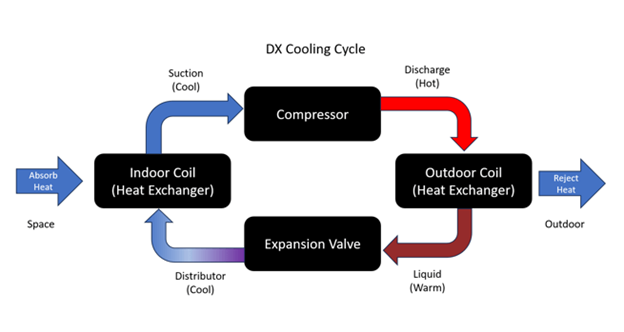
These components are interconnected by refrigerant piping, forming a continuous loop. During cooling mode, the refrigerant circulates through this loop, removing heat from the indoor air and releasing it outside.
Heat Pump vs. Traditional HVAC Systems
What sets the heat pump apart from a traditional HVAC system is its ability to reverse the refrigeration cycle to provide heating.
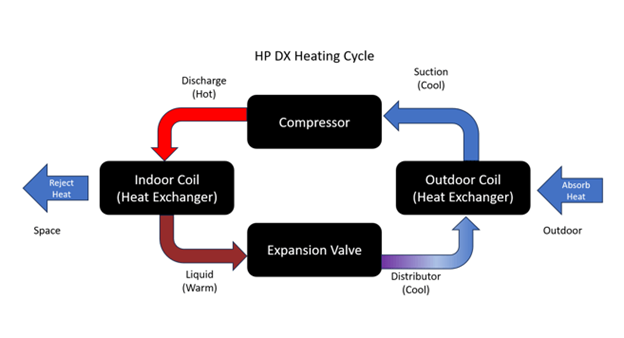
In cooling mode, the refrigerant absorbs heat from the indoor space and releases it outside. In heating mode, the refrigerant flow is reversed using a component called a reversing valve. This swaps the roles of the evaporator and condenser, allowing the heat pump to extract heat from the outside air (even in cold temperatures) and transfer it indoors to heat the space.
Key Features of Heat Pump Systems
- Dual Functionality: Heat pumps can provide both heating and cooling with a single system.
- Energy Efficiency: They are often more energy-efficient than traditional heating systems, such as furnaces or baseboard heaters, because they transfer heat rather than generate it.
- Environmentally Friendly: Heat pumps typically have a lower environmental impact as they use renewable heat from the air.
A heat pump system provides a reliable, energy-efficient solution for year-round climate control, offering both heating and cooling capabilities through the same refrigeration cycle.
What Is an Air-Source Heat Pump?
Air-source heat pumps (ASHPs) are an energy-efficient solution for both heating and cooling your home or business. Unlike traditional HVAC systems that rely on fossil fuels, air-source heat pumps use electricity and transfer heat between indoor and outdoor air—making them ideal for that prioritizing sustainability and reducing carbon emissions.
How Do Air-Source Heat Pumps Work?
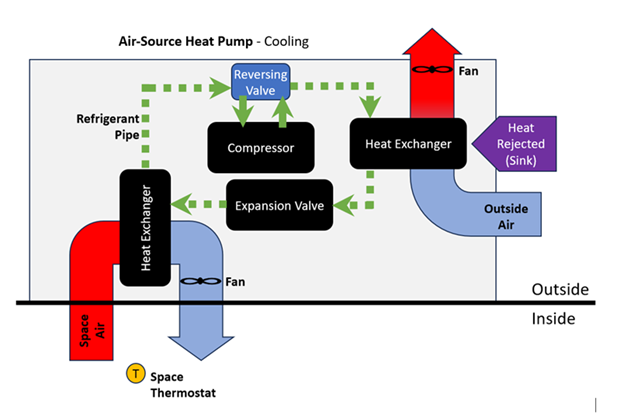
An air-source heat pump uses outdoor air as the source (or sink) for heat, depending on the season. The system includes two heat exchangers and two fans—one moves air inside your building, and the other circulates air across the outdoor coil.
- In Cooling Mode:
When the thermostat detects the need for cooling, the indoor coil fills with cold refrigerant that absorbs heat from indoor air. This cooled air is then circulated back into the space. The refrigerant, now carrying the heat, moves outside and releases it into the atmosphere via the outdoor coil. - In Heating Mode:
When heating is needed, the system reverses the refrigerant flow. The refrigerant absorbs heat from the outdoor air and transfers it indoors, warming your space—even in chilly conditions.
While these systems are typically installed outdoors and perform well in moderate climates, very low or high outdoor temperatures can affect their efficiency. In colder environments, supplemental heating (like electric or gas backup) may be required to maintain indoor comfort.
Advances in Cold-Climate Heat Pumps
Modern technology has significantly improved air-source heat pumps, allowing many models to operate efficiently even in below-freezing temperatures. These next-generation systems are a strong alternative to gas heating in areas aiming for energy independence and reduced emissions.
Types of Air-Source Heat Pumps
1. Packaged Heat Pumps
All components—compressor, heat exchangers, and fans—are enclosed in a single unit, usually installed on rooftops in commercial buildings.
2. Split System Heat Pumps
In this design, the system is divided into two units:
- The outdoor unit contains the compressor and a coil to reject or absorb heat.
- The indoor unit includes the air handler and another coil for delivering treated air to the interior.
Both configurations operate using the same heat transfer principles and can be customized to suit different building layouts.
Final Thoughts: Are Air-Source Heat Pumps Right for You?
Air-source heat pumps offer an efficient and environmentally friendly way to heat and cool your space. With the right setup, they can lower your energy bills, reduce reliance on fossil fuels, and maintain year-round comfort.
Before choosing a system, consider factors like local climate, home insulation, and whether supplemental heating is needed. With the right planning and installation, an air-source heat pump can be a long-lasting investment in comfort and sustainability.